

How we turned maintenance chaos into operational confidence.
Our client is a major international offshore energy operator with oil and gas production platforms in the North Sea. The company manages complex offshore installations with strict requirements on safety, uptime, and regulatory compliance. Operations involve multiple assets, long supplier chains, and a high degree of technical documentation and maintenance dependencies.
Unplanned downtime, missing spare parts, and maintenance teams constantly firefighting. For our client, reactive maintenance had become the daily reality.
The ambition was there, but the foundation wasn’t.
Our client wanted predictive, proactive maintenance. But reality was fragmented. Data, documentation, and maintenance requirements were spread across projects, suppliers, and spreadsheets. As a result, the CMMS couldn’t be trusted because it didn’t reflect what was actually installed.
Our client’s biggest obstacle wasn’t lack of competence. It was lack of structure. Maintenance documentation existed but was difficult to find or it didn’t reflect what was installed. Asset hierarchies in SAP were incomplete or wrong. Spare parts data was unreliable. And critical knowledge was not integrated in the systems.
Without a CMMS setup that mirrored reality and captured maintenance knowledge correctly, the organisation couldn’t build reliable history, analyse failures, or plan with confidence.
The Costs:
Our task was to design and implement a complete maintenance environment for the client’s water injection system, including filtration, pumps, and gas turbines. The purpose was to ensure world-class maintenance of both the system and equipment.
Step 1: Fix the foundation
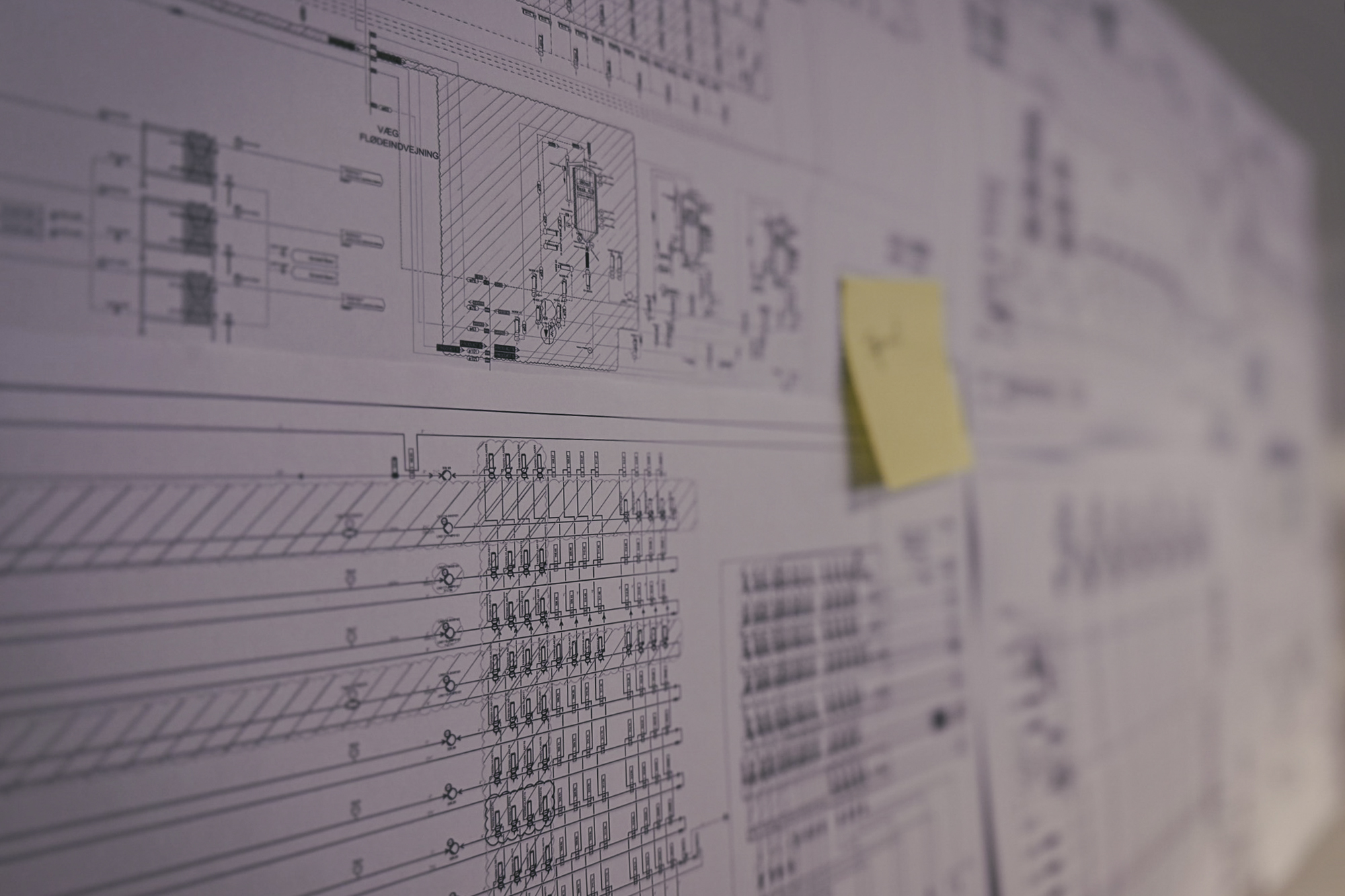
We started by validating and digitalising all technical documentation. Then we went offshore to verify everything against the physical installation. Missing documents were added and errors were corrected to make sure that the documentation reflected what was actually there.
Step 2: Align the CMMS with reality
We cleaned up and structured the technical hierarchy in SAP, so it reflected the actual offshore installation.
As a result, our client is now able to order the right spare parts for the right equipment, build a reliable maintenance history, and analyse failures over time. The CMMS has become a tool the team can trust, not a database they avoid.
Step 3: From corrective to preventive maintenance
Using FMECA/RCM methodology, our engineers analysed how each part of the system could fail and what the consequences would be for safety, production, environment, and cost.
Working closely with the client’s specialists, we defined:
These insights were converted into preventive maintenance plans and uploaded directly into SAP, replacing firefighting with structured, risk-based maintenance.
Step 4: The right spare parts
Finally, we performed a risk-based spare parts analysis.
Instead of guessing or overstocking, the client now knew which spare parts were critical, what needed to be in stock, and what could safely be ordered when needed.
Value delivered:
Most importantly: The organisation now has the structure and data needed to continue their journey toward high-performing maintenance.
The client now has a maintenance foundation they can trust and build on.
People trust what they help build
A maintenance system only creates value if people believe in it.
That’s why involvement was central to this project. Operators, technicians, engineers, and management were actively engaged throughout the process. We ran workshops to extract critical knowledge from experienced personnel and embed it into documentation, maintenance plans, and the CMMS.
When people can see their own input reflected in the system, they take ownership. And when documentation, CMMS and physical equipment are aligned, trust follows naturally.
Reliable operations depend on reliable systems and data. When documentation, asset structure, maintenance plans and CMMS are aligned, maintenance stops being guesswork and becomes predictable.
By structuring and integrating technical data into your CMMS and ensuring it reflects the physical installation, we help you create maintenance that works. It enables better planning, fewer errors, faster decision-making and maintenance teams that trust the system they work in.
The result is better data and systems, and operations that support uptime instead of fighting it.